
When the Safety Net Shrinks, Rural Communities Feel It First
December 29, 2025
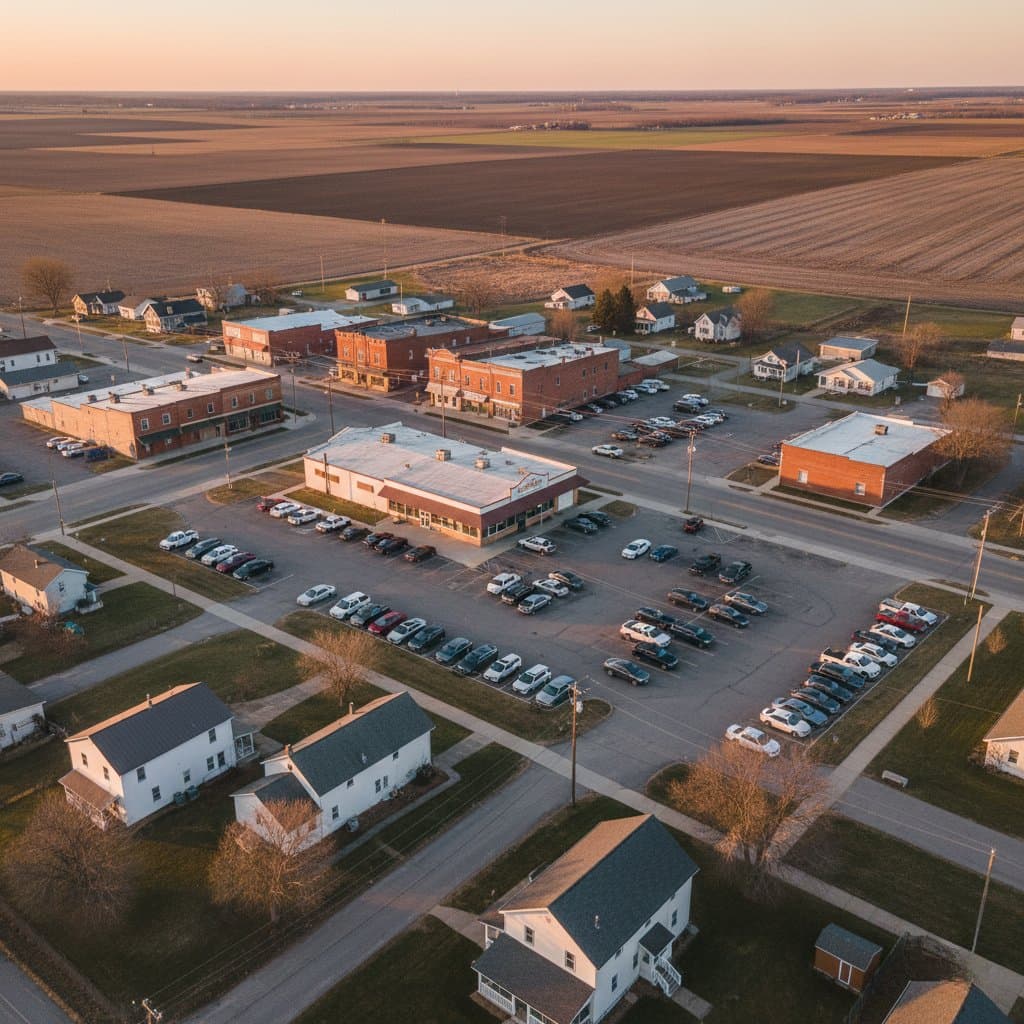
I grew up in a town of 4,500 people in rural Illinois. One grocery store. If it closed, the nearest alternative was a 20-minute drive, assuming you had a car and gas money. That store wasn't just where you bought milk. It was a community anchor: a source of jobs, tax revenue, and daily foot traffic that kept the rest of the town's small businesses viable.
So when I read a recent article in Dollars & Sense reporting that some rural grocery stores depend on SNAP recipients for more than 80% of their customer base, the math wasn't abstract to me. I could picture exactly what a disruption to that revenue stream looks like.
The Multiplier in Reverse
SNAP benefits are one of the most efficient forms of economic stimulus the federal government has ever designed. Every $1 in SNAP spending generates between $1.50 and $1.80 in broader economic activity. Benefits move fast: 80% are spent within two weeks, 97% within the month. That money flows from families to grocery stores to distributors to farmers, sustaining an economic chain that touches every part of the food system.
But multipliers work in both directions. When SNAP contracts, the ripple effects compound just as quickly.
The November 2025 government shutdown offered a stark preview. For the first time in the program's history, SNAP benefits were not funded during a federal appropriations lapse. The results were immediate: a single Michigan grocery store lost $56,000 in one day. Grocery workers had their hours cut. Markets in Colorado worried about making rent. Food banks were overwhelmed with lines stretching for hours.
That disruption lasted roughly two weeks. What's coming next will last much longer.
A Slow Erosion, Not a Sudden Stop
The One Big Beautiful Bill, signed into law last summer, restructures SNAP in ways that will roll out gradually but cut deeply. The Congressional Budget Office estimates $187 billion in SNAP reductions over the next decade.
The most consequential change is a shift in who pays for the program. For decades, the federal government funded 100% of SNAP benefits, allowing the program to expand automatically during recessions. Under the new law, states with error rates above 6% will be required to cover a portion of benefit costs. Since 2003, only one state has consistently stayed below that threshold.
Stricter work-reporting requirements are already in effect. The CBO estimates more than three million people will lose benefits as a result, not necessarily because they don't work, but because proving 20 hours of weekly employment is difficult for people with fluctuating schedules or nontraditional jobs.
New restrictions on immigrant eligibility, reduced benefit amounts, and increased state administrative cost-sharing compound the impact. The Brookings Institution has warned that shifting SNAP costs to states fundamentally undermines the program's ability to function as an economic stabilizer during downturns.
Why Rural Communities Bear the Heaviest Burden
Rural areas already experience higher rates of food insecurity and higher rates of SNAP participation than the national average. They also have far fewer grocery options. Some counties have a single store serving communities spread across dozens of miles.
That concentration of dependence creates enormous fragility. When SNAP spending drops, rural retailers lose a disproportionate share of their revenue. If even one store closes, the consequences cascade: lost jobs, a smaller tax base, reduced foot traffic for neighboring businesses, and longer trips for families who may already struggle with transportation.
As one Alabama policy analyst described her rural county: one grocery store and a lot of Dollar Generals, all reliant on SNAP. If that store goes, so does a meaningful share of the local economy.
The people with resources leave. The people without them stay and face deeper hunger, fewer services, and a shrinking community around them.
Food Banks Can't Fill This Gap Alone
When SNAP falters, food banks and pantries become the de facto safety net. But scale matters here. SNAP provides nine times as much food assistance as the charitable food system. Pantries and food banks play a critical role, but they were never designed to replace a federal entitlement program serving 42 million people.
During the November freeze, that mismatch was painfully visible. Volunteers scrambled to load boxes. Families waited in line for hours. The charitable system absorbed what it could, but the gap was enormous.
As SNAP erodes over the coming months and years, the pressure on local food relief networks will intensify. The changes won't generate the same headlines as a sudden shutdown, but their cumulative effect on communities will be just as real.
The Coordination Challenge Ahead
This is where the conversation shifts from policy analysis to practical strategy. Community foundations funding food relief need to be asking hard questions right now: Where are the gaps forming in our service area? Which neighborhoods are losing coverage? Are our grantees positioned to absorb increased demand? Can they coordinate with each other quickly enough when conditions change?
These aren't questions you can answer with quarterly grant reports compiled into a PowerPoint deck. They require real-time visibility into an entire food relief ecosystem, the kind of visibility that most foundations simply don't have today.
The foundations that start building that infrastructure now, investing in coordination systems, shared data, and ecosystem-wide situational awareness, will be the ones equipped to lead when the full impact of these SNAP changes arrives.
A year and a half from now, as one advocate put it, our country is going to look very different. The question is whether the organizations closest to the problem will be ready.