
Food Insecurity Hit 16% in November. Here's What That Means for Community Foundations
December 10, 2025
Purdue University's Center for Food Demand Analysis and Sustainability (CFDAS) released new data on December 9 showing a sharp spike in U.S. household food insecurity. The numbers should concern anyone working in food relief, but especially community foundations trying to coordinate grantee networks in real time.
The headline figure: 16% of U.S. households were food insecure in November 2025, up from 13.3% in October. That's a 2.7 percentage point jump in a single month.
For SNAP participants, the picture is considerably worse. Food insecurity among households receiving SNAP benefits rose 10 percentage points, from approximately 36% in recent years to 46% in November.
What's Driving the Spike
Three overlapping forces converged in the fall of 2025, and each one carries distinct implications for how food relief ecosystems function.
The longest government shutdown in U.S. history disrupted federal nutrition infrastructure. The federal government shut down on October 1 after Congress failed to pass appropriations legislation. It lasted through November 12, a total of 43 days. During that period, USDA instructed all states to hold November SNAP benefits for both new and ongoing cases. Some states scrambled to create emergency payment programs with state funds. Others could not. Courts intervened after two federal judges ruled that freezing SNAP payments was likely unlawful. The Trump administration ultimately funded benefits at 50% using USDA contingency reserves before the shutdown ended.
The result was weeks of chaos for 42 million SNAP recipients and the food banks, pantries, and meal programs that serve alongside them. Even after the shutdown ended and benefits resumed, states faced administrative backlogs and uneven distribution timelines. The organizations that families turned to during the disruption were already stretched before November arrived.
SNAP policy changes are tightening eligibility and reducing benefits. Public Law 119-21, the One Big Beautiful Bill Act signed in July 2025, enacted what multiple analysts have described as the most significant changes to SNAP in the program's 60-year history. The Congressional Budget Office estimates these provisions will reduce federal SNAP spending by approximately $187 billion over 10 years and reduce participation by roughly 2.4 million people per month.
Key changes include expanded work requirements for able-bodied adults (now covering those up to age 65, with the dependent child exemption limited to children under 14), restrictions on the Thrifty Food Plan that serves as the basis for benefit calculations, a shift in administrative cost-sharing from a 50/50 federal-state split to 75% state responsibility beginning in fiscal year 2027, and the elimination of mandatory funding for SNAP nutrition education programs.
For North Carolina specifically, where SNAP is administered at the county level, these changes mean local governments will absorb both new compliance burdens and the downstream effects of reduced benefits hitting their communities. The North Carolina Institute of Medicine noted in October that SNAP benefits already failed to cover the cost of a moderately priced meal in all 100 North Carolina counties in 2024, before these cuts took effect.
Food inflation continues to erode purchasing power. The Purdue CFDAS data tracks a consistent pattern: food insecurity was highest in 2022 and 2023 when food inflation exceeded 10%. It fell to 12.5% in 2024 as inflation eased toward 2%. In 2025, both food inflation and food insecurity have crept back up. The 2025 average through November sits at 14.2%, reversing the prior year's progress.
The Baseline Was Already Elevated
These November numbers land on top of an already concerning trend. The most recent USDA annual Household Food Security report, published in September 2024 using 2023 data, found that 13.5% of U.S. households (18 million households, encompassing 47 million people) were food insecure. That was a statistically significant increase from 12.8% in 2022, and the highest rate since 2014.
The same report showed food insecurity was highest in the South at 16%, higher in rural areas (16.1%) and cities (16.7%) than in suburbs (12.7%), and sharply disproportionate across racial lines: 23.3% of Black households and 21.9% of Hispanic households experienced food insecurity, compared to 10.4% of white, non-Hispanic households.
The 2024 annual report has not yet been released. But the Purdue monthly tracking suggests the November spike is not an anomaly; it's the sharpest escalation in a trend that has been building throughout 2025.
The Data Visibility Problem Just Got Worse
In September, USDA announced it will terminate the Household Food Security report after one final release covering 2024 data. The annual survey, which has been the national benchmark for measuring food insecurity since the mid-1990s, will no longer be produced. USDA called the reports "redundant, costly, politicized, and extraneous."
Anti-hunger researchers and advocates have pushed back forcefully. The Food Research & Action Center called the decision "shortsighted," noting that no other national survey provides the same specificity across demographics and geography. Feeding America's CEO said the loss "will create gaps" in understanding hunger trends. Researchers at Syracuse University and the Union of Concerned Scientists pointed out that there is no secondary or alternative data source with comparable scope.
The timing is difficult to ignore. The federal government is simultaneously reducing SNAP benefits, expanding work requirements that will remove participants from the program, shifting administrative costs to states, and eliminating the primary instrument for measuring whether these changes are increasing food insecurity. For organizations working on food security at the state and local level, the implication is straightforward: if you want to understand what's happening in your community, you will increasingly need to build that picture yourself.
Why This Matters for Community Foundations
These data points are not abstract. They describe the operating environment for every food pantry, meal program, and nutrition assistance organization that community foundations fund.
When food insecurity spikes 2.7 points in a single month, that spike shows up at grantee front doors as longer lines, increased frequency of visits, and new faces from households that previously managed without assistance. It shows up in pantry shelves that empty faster than distribution schedules anticipated. It shows up as volunteers and staff working longer hours without additional resources.
The question for foundations is straightforward: can you see this happening across your grantee network in real time, or do you learn about it three months later in a quarterly report?
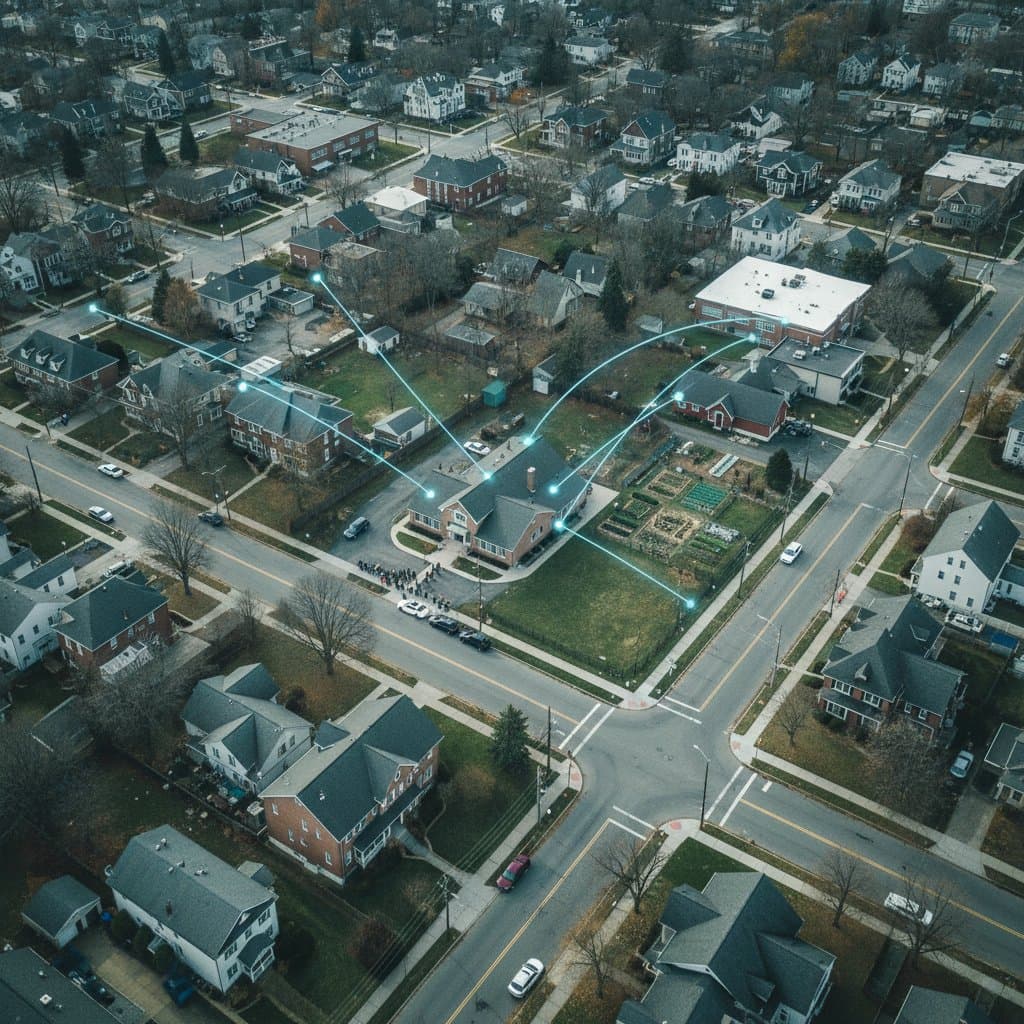
This is the coordination gap that defines food relief work today. The challenge is rarely a shortage of organizations doing good work. It's the absence of shared visibility into what that work looks like collectively: which neighborhoods have coverage, which don't, where demand is surging, and where resources could be redirected.
When the federal safety net contracts, whether through shutdowns, policy changes, or the elimination of the data infrastructure that tracks their impact, the organizations closest to the problem absorb the shock first. Community foundations sit in a unique position to help those organizations respond more effectively, but only if they can see the ecosystem clearly enough to know where to direct support.
The Purdue CFDAS monthly data provides one of the few remaining real-time signals for tracking food insecurity nationally. But national signals don't tell a foundation in Charlotte or Greenville or Asheville what's happening across their specific grantee network. That requires local coordination infrastructure: shared reporting, real-time maps, and collective visibility into who is serving where and what gaps are emerging.
The organizations you fund are already responding to these conditions. The question is whether you can see their collective response clearly enough to make it more effective.
Sources: Purdue University Center for Food Demand Analysis and Sustainability, Data Snapshot, December 2025; USDA Economic Research Service, Household Food Security in the United States in 2023, September 2024; Congressional Budget Office, Estimated Effects of Public Law 119-21 on SNAP, August 2025; North Carolina Institute of Medicine, Federal Changes to Food Assistance in North Carolina, October 2025.