
When a Food Bank Becomes a Foundation: What Maryland's Neighbor Impact Grant Reveals About the Future of Food Security Funding
February 6, 2026
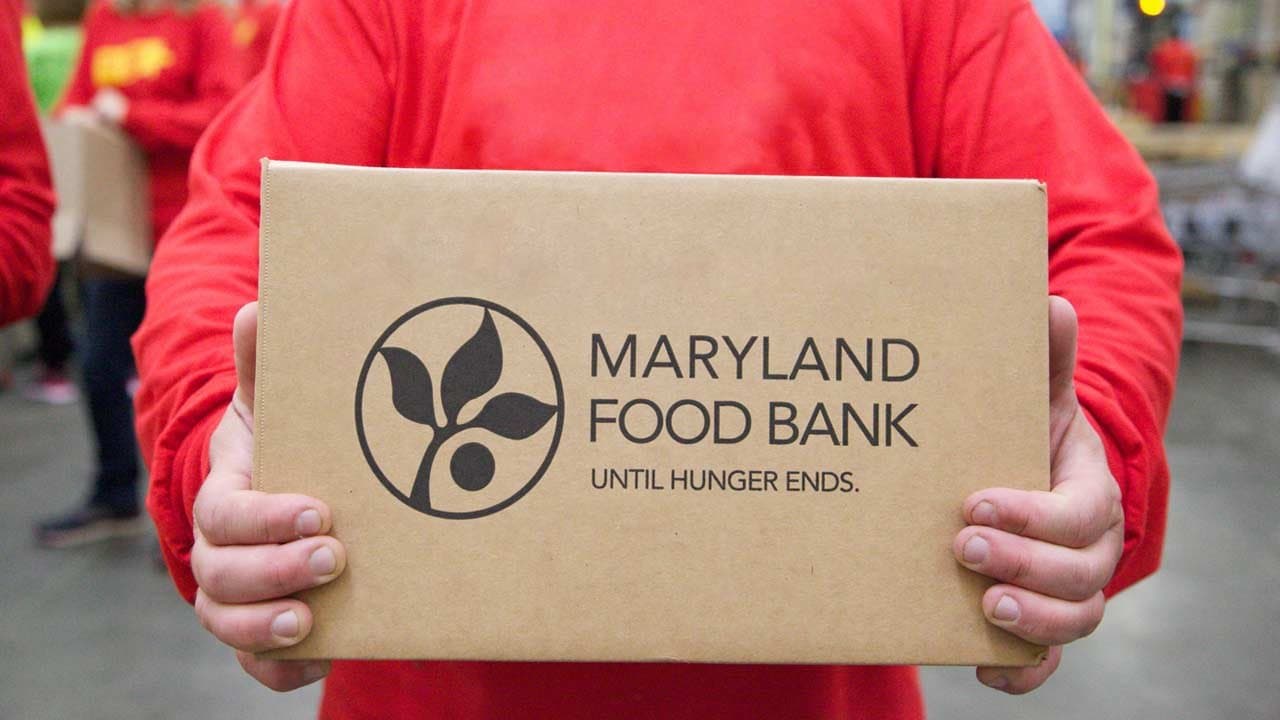
There's a quiet shift happening in how America funds its response to food insecurity, and one of the clearest examples is sitting in plain sight on the Maryland Food Bank's website.
Their Neighbor Impact Grant isn't a traditional food bank program. It's a grantmaking initiative that funds "promising practices and innovative approaches that have the potential to bring about lasting change." If that language sounds familiar, it should. It reads like a community foundation's program description, not a food bank's.
And that's exactly what makes it worth paying attention to.
Beyond Pounds of Food
The Neighbor Impact Grant supports Pillar Two of MFB's Strategic Plan, which focuses on "creating pathways out of hunger" by "addressing deeply rooted causes of hunger while opening up pathways out of food insecurity and toward greater local resiliency."
This is a food bank explicitly acknowledging that distributing more food is necessary but insufficient. The deeper work, the work that actually moves the needle on food insecurity, requires investing in the conditions that make people food insecure in the first place.
Look at the six organizations that received inaugural grants in Fall 2023:
The Black Church Food Security Network is teaching churches how to build, tend, and harvest urban farms on church grounds, transforming congregations into providers of community food sovereignty and resilience. This isn't supplemental food distribution. It's building permanent local food infrastructure owned by the community itself.
Black Yield Institute is conducting urban farming in West Baltimore, explicitly working to "redress systemic and inequitable access to land and food resources for communities of color." Food production that's community-produced, community-sustained, and community-oriented.
City of Refuge Baltimore took perhaps the most unconventional approach. Located in a food desert with poor public transit, they partnered with NAPA Auto Parts to launch an automotive technician workforce development program providing subsidized car repairs for low-income residents. The logic? If you can't physically get to food, job training, or services because your car doesn't work, fixing transportation barriers is food security work.
Johns Hopkins Children's Center deployed community health workers for phone outreach and home visits, connecting families to food, transportation, and case management, leaving families "enrolled in appropriate benefits and supported by wraparound services."
United Way of Central Maryland focused on the childcare shortage, recognizing that unstable or unaffordable childcare directly impacts a family's ability to maintain employment and, by extension, food security.
Westminster Rescue Mission aimed to build a collective impact network of partners to transform the food security and human services landscape across Carroll County, reorganizing how an entire county coordinates its services.
What This Reveals About the Evolving Food Security Landscape
Three observations stand out.
First, the boundaries between "food bank" and "foundation" are blurring. When a food bank starts making grants to community organizations working on workforce development, urban farming, transportation access, and childcare advocacy, it's functioning as a funder with a food security lens, not just a food distributor. This has significant implications for community foundations that see food relief as part of their portfolio. The ecosystem is getting more complex, with more funders, more approaches, and more intersections between food security and adjacent issues.
Second, root-cause work is inherently multi-sector and multi-geography. These six grantees span urban farming, workforce development, healthcare navigation, childcare policy, and systems coordination. They operate across different parts of Maryland with different populations and different theories of change. This is the messy reality of addressing food insecurity at its roots rather than its symptoms.
Third, coordination becomes exponentially harder when you move beyond food distribution. Tracking pounds of food delivered is straightforward. Tracking the collective impact of six organizations working on fundamentally different root-cause interventions across different geographies? That requires a different kind of infrastructure entirely.
The Coordination Question Nobody's Asking
The Neighbor Impact Grant applications are closed until summer 2027, which means there are years of learning happening right now across these six programs. Each one is generating insights about what works, what doesn't, where the gaps are, and where unexpected connections exist between their approaches.
But how does that learning get captured and shared? How does the Maryland Food Bank know whether the urban farming model in West Baltimore is creating synergies with the wraparound services at Johns Hopkins? How do they identify whether the Carroll County collective impact network is discovering gaps that the workforce development program in another part of the state has already figured out how to fill?
Traditional quarterly reporting can tell you what individual organizations accomplished. It can't tell you how an ecosystem of root-cause interventions is functioning as a whole.
This is the coordination challenge that the food security sector hasn't fully reckoned with yet. As more funders, from food banks to community foundations to private philanthropy, invest in root-cause approaches, the need for shared visibility across these diverse interventions becomes critical. Not just for accountability, but for learning, adaptation, and the kind of real-time coordination that turns a collection of individual grants into a genuinely collaborative ecosystem.
What This Means for Community Foundations
If you're a community foundation with food relief in your portfolio, the Maryland Food Bank's approach should prompt a few questions:
Are your food security investments limited to distribution, or are you also funding root-cause interventions? If so, how are you tracking the connections between them?
Do you have visibility into what other funders (including food banks acting as funders) are supporting in your region? Are there overlaps you don't know about, or collaboration opportunities that aren't happening because nobody can see the full picture?
When your board asks whether your food security strategy is working, can you answer with ecosystem-level evidence, or are you limited to aggregating individual grantee reports?
The organizations that figure out how to see, coordinate, and learn across these increasingly complex food security ecosystems will be the ones that demonstrate the kind of collective impact that moves communities from fragmented relief to lasting food security.
The Maryland Food Bank has taken a bold step by funding root-cause work. The next frontier is building the coordination infrastructure to make that work add up to more than the sum of its parts.
Matt Corzine is Co-Founder and CEO of FastRoots, a collaborative data platform for foundations coordinating food relief ecosystems. His newsletter, Ground Truth, explores the intersection of data, coordination, and community impact in the food security space.